

Curriculum
Computing
Computing at Rookery develops confident, creative and responsible users of technology. Pupils build knowledge across computer science, information technology and digital literacy, learning how digital systems work, how to create with technology and how to use online environments safely and thoughtfully.

< Back To All Subjects
Curriculum Intent
Our computing curriculum aims to equip pupils with the knowledge and habits they need to understand, use and shape technology. Computer science develops computational thinking through algorithms, programming, logical reasoning, data representation and an understanding of networks and systems. Information technology teaches pupils to select and use digital tools to create, organise, analyse and communicate content. Digital literacy develops safe, responsible and discerning use of technology, including privacy, online behaviour and knowing how to seek help. Learning is sequenced so pupils build on prior knowledge rather than repeatedly completing disconnected software activities. We want pupils to become confident problem-solvers who can debug, evaluate and improve digital outcomes and who understand both the opportunities and risks of an increasingly digital world. By the end of Year 6, pupils should have secure foundations for secondary computing and be able to use technology responsibly, purposefully and creatively across the curriculum and in everyday life.
Curriculum Implementation
Computing is implemented through a progressive curriculum that develops pupils’ knowledge and understanding across computer science, information technology and digital literacy. Pupils learn how digital systems work, develop computational thinking through algorithms and programming, create and manipulate digital content, work with data and use technology purposefully. Online safety and responsible use are embedded throughout so that pupils understand how to use technology safely, respectfully and critically.
Knowledge is sequenced from simple algorithms, input and output and purposeful use of technology towards increasingly complex programming, debugging, data handling, networks, search and evaluation. Important concepts and vocabulary are revisited in new contexts so that pupils can build secure connections between units and apply prior learning with increasing independence. Online safety is revisited regularly and linked to the technologies and digital environments pupils encounter.
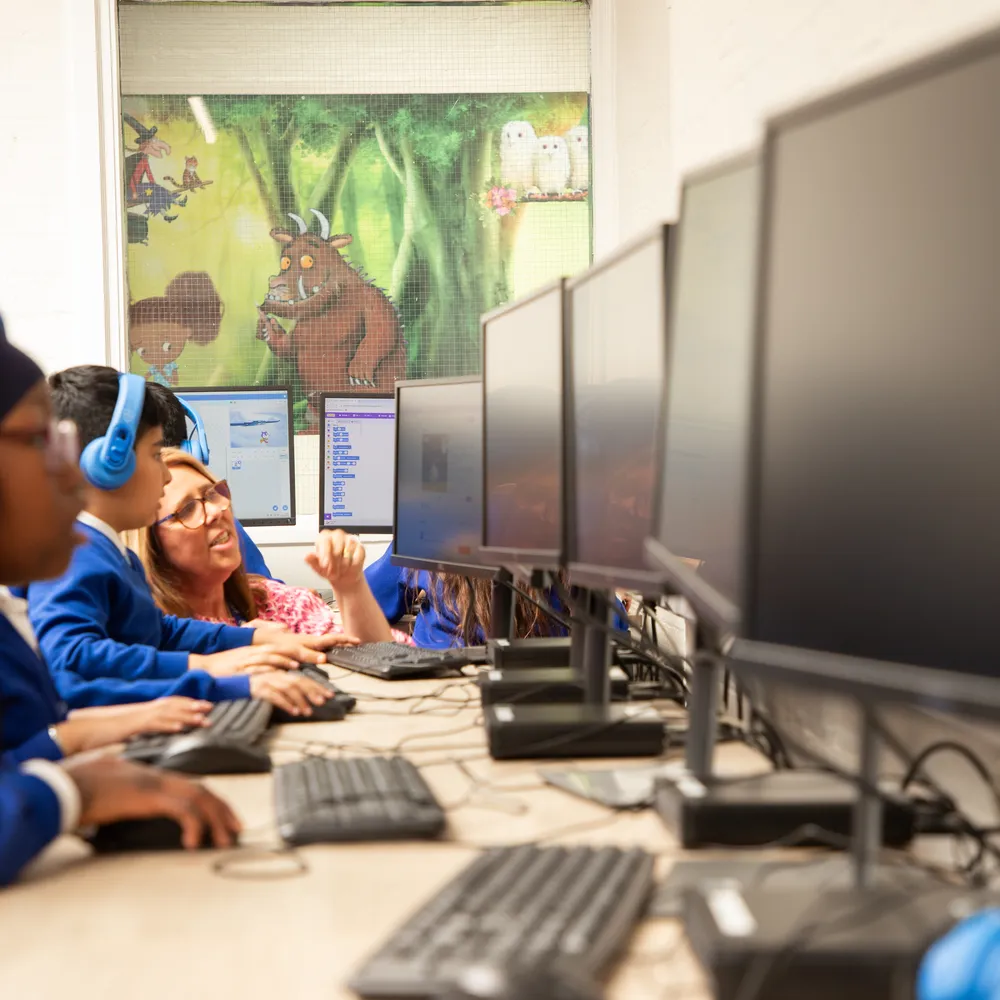
Teaching combines clear explanation and modelling with practical application. Pupils have regular opportunities to create, test, debug, evaluate and improve digital outcomes, while teachers use questioning and assessment to identify misconceptions and check understanding. Tasks are designed to develop logical reasoning and problem-solving rather than simply familiarity with individual software, helping pupils build knowledge and skills that can transfer to new technologies and contexts.
Reading, Vocabulary & Oracy
Computing vocabulary is deliberately taught, including terms such as algorithm, sequence, variable, network, data, input, output and debug. Pupils learn to explain processes precisely and describe why a solution works. Reading includes instructions, interfaces and age-appropriate information about digital systems and online safety. Discussion helps pupils evaluate sources, online behaviour and alternative solutions.
Inclusion & Adaptation
Teachers adapt interfaces, devices, task complexity, written recording and the amount of scaffolding so all pupils can engage with the intended computing concepts. Pupils may use visual programming, paired work, step-by-step prompts or assistive technology where needed. Support is gradually reduced as independence grows. More confident pupils deepen learning by creating more efficient solutions, explaining algorithms, debugging complex problems or evaluating alternative approaches.
Assessment
Assessment focuses on whether pupils understand and can apply computing concepts. Teachers use questioning, observation, digital outcomes, code, explanations and problem-solving to identify misconceptions. Retrieval checks whether important vocabulary and concepts have been retained across units. Online safety understanding is assessed through scenarios and discussion as well as factual recall. Findings inform subsequent teaching and curriculum review.
Enrichment & Wider Opportunities
Computing provides opportunities to create digital products, solve authentic problems and understand how technology shapes society and future careers. Links with mathematics, science, design technology and creative subjects help pupils transfer digital skills purposefully. E-safety learning also supports wider personal development by helping pupils participate responsibly and confidently in digital life.
Curriculum Impact
Impact is evident when pupils can explain key computing concepts, create and debug programs, choose appropriate digital tools and use technology safely and responsibly. Pupils should increasingly solve problems independently, transfer knowledge between contexts and evaluate the quality or reliability of digital outcomes. They should understand that technology is created by people and can be analysed and improved. Leaders evaluate impact through pupil discussion, digital work, lesson evidence and assessment, checking that all pupils gain meaningful computing knowledge rather than simply becoming familiar with particular devices or software.
Class Dojo
Stay connected with your child’s learning and receive important school updates.

Key Information
Find policies, safeguarding information, SEND details and statutory documents.

Calendar
Keep up to date with upcoming events, term dates and important school activities.
Working Together to Help Every Child Thrive
Strong partnerships between home and school are at the heart of everything we do. By working together, we create the best possible opportunities for every child to succeed academically, socially and emotionally.